
Dilapidation Reports In Northern Melbourne
Dilapidation Reports Experts
Independent inspections by a BPC-registered Building Practitioner and qualified Carpenter & Joiner with over 30 years of building industry experience.
Independent dilapidation inspections and detailed condition reports across Northern Melbourne. BPC-registered Building Practitioner, qualified carpenter and joiner, detailed photographic documentation and same-day reports.
A dilapidation report provides an independent record of the existing condition of a property before nearby construction, demolition, excavation or significant earthworks commence.
The inspection documents visible pre-existing conditions such as cracking, movement, damage to walls and finishes, paving and concrete defects, drainage conditions and other observable building elements, supported by detailed photographs and written descriptions.
If concerns arise after neighbouring construction begins, the report provides a dated baseline of the property's condition before the works commenced, helping distinguish pre-existing defects from changes that may have occurred during construction.
Precision 1 Property Inspections provides dilapidation reports throughout Melbourne's northern suburbs for homeowners, builders, developers and other parties requiring an independent property condition record.
David Dorcich personally carries out each inspection, bringing seven years of inspection experience, BPC registration and a background as a qualified carpenter and joiner to the assessment.
Reports are prepared with clear descriptions and comprehensive photographic documentation, providing a professional record that can be referred to if the property's condition is questioned during or after neighbouring works.
Same-day reporting means your property's existing condition can be documented promptly before nearby works commence.
GET A FREE QUOTE
Precision 1 Property Inspections
What Is a Dilapidation Report?
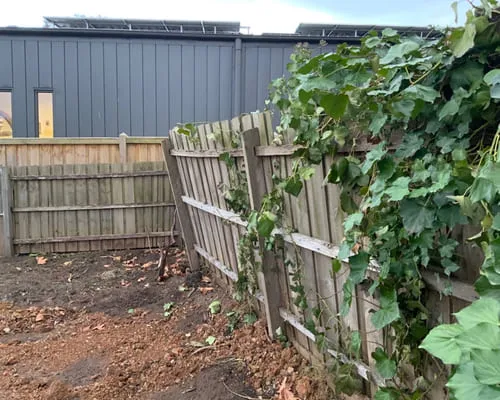
A dilapidation report provides a dated, independent photographic record of a property's existing condition before nearby construction, excavation or demolition works begin.
The inspection documents accessible areas that may potentially be affected by neighbouring works, including external walls and finishes, internal walls and ceilings, windows and doors, driveways and paths, retaining walls, fencing and other relevant building elements and structures.
Existing cracks, evidence of movement or settlement, staining and areas of visible damage are photographed, clearly described and recorded by location, creating a detailed baseline of the property's condition before construction commences.
If damage is later alleged to have resulted from nearby works, the report provides valuable independent documentation to help distinguish pre-existing defects from subsequent changes or damage.
Precision 1 dilapidation reports are prepared by David Dorcich, a BPC Registered Building Practitioner and qualified carpenter and joiner, with clear photographic documentation and practical descriptions providing property owners, builders and other stakeholders with a reliable record that can assist should a dispute arise.
Document the condition before works begin - because establishing what was pre-existing can be considerably more difficult afterwards.
Precision 1 Property Inspections
When You Need a Dilapidation Report - and Who Normally Pays for It
A dilapidation report provides a detailed record of the existing condition of a property before nearby construction, demolition, excavation or other potentially disruptive works commence.
These reports are commonly commissioned where proposed works may involve excavation, demolition, piling, heavy machinery, vibration or construction close to neighbouring buildings and boundaries. They are particularly useful for developments, subdivisions, major renovations, basement construction and infrastructure projects.
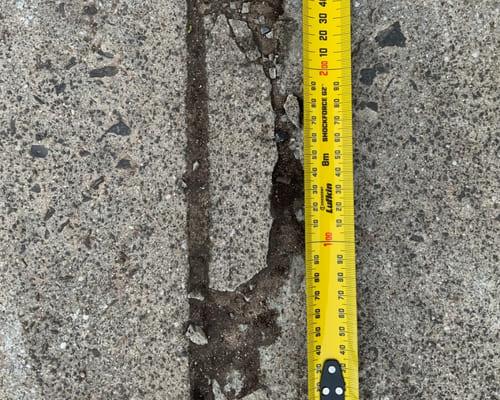
The inspection documents existing conditions such as cracking, movement, surface damage and other visible defects, supported by photographs and location details. This establishes an independent record of the property's condition before work begins, helping distinguish between pre-existing defects and any damage that may subsequently occur.
In many cases, the developer, builder or contractor undertaking the works arranges and pays for the dilapidation report, particularly where it forms part of their project requirements or risk-management process. Requirements can vary depending on the project, building permit, planning permit and other relevant conditions.
Property owners can also arrange their own independent dilapidation inspection if they want a separate record of their property's condition before neighbouring works commence.
For the best protection, the inspection should be completed before construction or demolition work begins.
Precision 1 Property Inspections
What Precision 1's Dilapidation Reports Include and How They're Used
A Precision 1 dilapidation report provides a clear, independent record of the existing condition of a property before nearby construction, demolition, excavation or other potentially disruptive works commence.
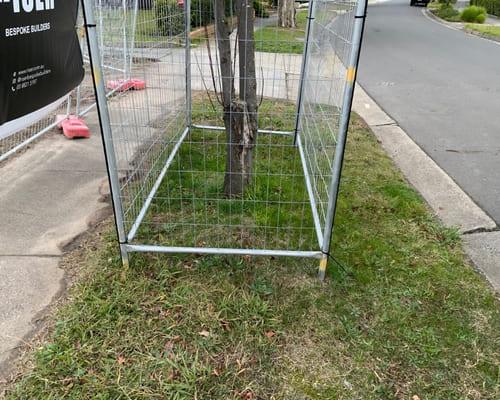
The inspection documents the visible condition of the agreed areas of the property, which may include external walls, internal walls and ceilings, windows and doors, paving, driveways, retaining walls, fences, garages, outbuildings and other relevant building elements.
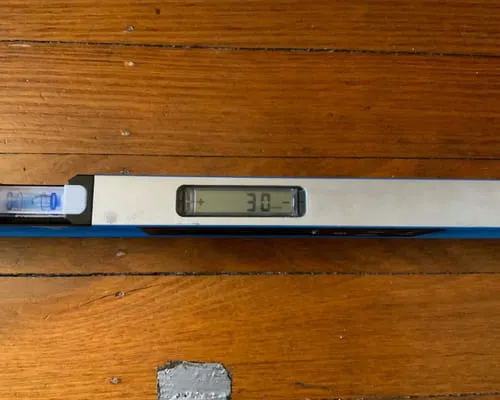
Existing defects such as cracking, movement, deterioration, surface damage and other visible conditions are recorded with detailed photographs and location references, creating a comprehensive snapshot of the property before work begins.
This documentation can later be used to compare the property's condition if concerns arise during or following neighbouring construction works, helping establish whether observed damage was pre-existing or has appeared since the original inspection.
Where required, a post-construction dilapidation inspection can also be undertaken to compare the condition of the property against the original report.
Dilapidation reports are suitable for homeowners, builders, developers, contractors, adjoining property owners and other parties requiring an independent record of existing property condition.
For the most reliable comparison, the initial inspection should be completed before nearby works commence.
Precision 1 Property Inspections
How Much Does a Dilapidation Report Cost?
The cost of a dilapidation report varies depending on the property and the scope of documentation required, so Precision 1 does not use a one-size-fits-all price.
Factors can include the size of the property, the number of structures and areas to be documented, boundary length and the overall complexity of the site.
Precision 1 provides a clear fixed fee upfront based on the agreed scope, so you know the cost before the inspection proceeds.
Where a post-works comparison survey is also required, this is quoted separately according to the scope involved.
Commercial, industrial and multi-property assessments along a works corridor are assessed individually, as the number of boundaries and structures involved can vary considerably.
For an accurate quote, simply provide the property address, details of the proposed nearby works and whether a post-works survey may be required.
Document the condition before works begin - proving it afterwards is much harder.
Precision 1 Property Inspections
Single Survey vs a Before-and-After Pair, and Why Phone Photos Won't Hold Up
The most common choice is between a single pre-works dilapidation inspection and a before-and-after inspection package.
A pre-works inspection establishes a dated, independent baseline of the property's condition before nearby construction, excavation or demolition begins. This may also assist where documentation is required by a council, building surveyor, adjoining-owner agreement or other project requirement, subject to the specific conditions involved.
A post-works comparison inspection provides an additional record once construction is complete, allowing the property's condition to be compared against the original report. Where new cracking, movement or damage is alleged, having independent documentation from both before and after the works can provide valuable evidence when determining what has changed.
Personal photographs can still be useful, but an independent dilapidation report provides a systematic, professionally documented record prepared by a neutral third party, with photographs, descriptions and clear location references.
If potential property damage is a significant concern, a before-and-after inspection provides the strongest comparative record. If you simply require documentation of the property's existing condition before works commence, a pre-works inspection may be sufficient.
Precision 1 will help determine the appropriate scope based on the property, proposed works and your particular requirements.
Document before. Compare after. Protect your position.
Related Precision 1 Services
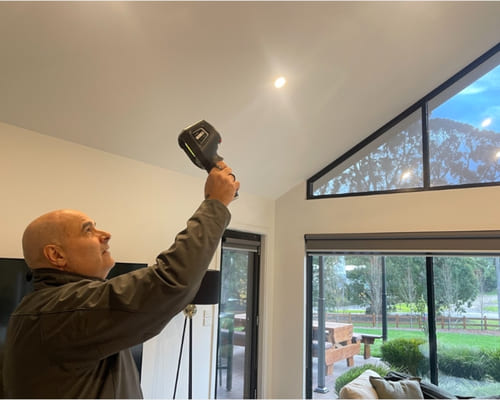
Protect your investment with an independent pre-purchase Building and Pest Inspection carried out by a BPC-registered Building Practitioner and qualified carpenter and joiner with 30 years of building and trade experience.
Inspections are conducted in accordance with AS 4349.1, with thermal imaging included where appropriate and a detailed same-day report.
With more than 2,000 property inspections conducted, you can rely on experienced, practical advice to identify potential defects and better understand the condition of the property before you commit.
Know what you're buying. Understand the risks. Negotiate with confidence.
Precision 1 Property Inspections Your Property. Our Precision.
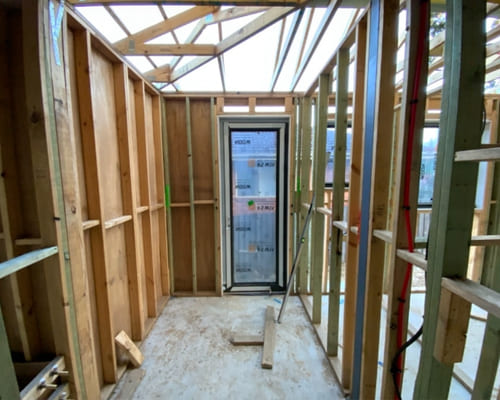
Protect your build with independent inspections at critical construction stages - slab, frame, lock-up, fixing and final handover.
Precision 1 assesses workmanship and construction against the NCC, approved documentation and relevant Guide to Standards and Tolerances, identifying defects and non-compliant work before it becomes concealed or progresses to the next stage.
You receive a clear, photographic same-day report detailing items requiring attention, which can be provided directly to your builder for rectification.
Identify defects early. Have them rectified properly. Build with confidence.
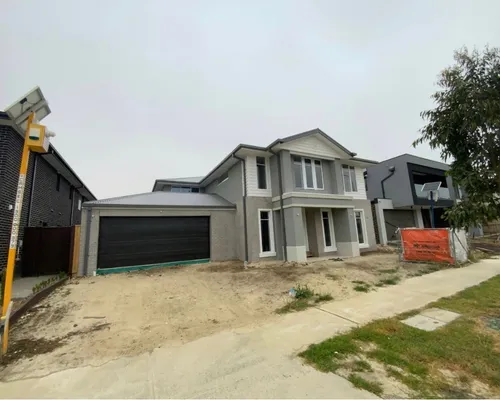
A Precision 1 Practical Completion Inspection (PCI) gives you an independent, detailed same-day defect report before final handover and payment.
Your new home is thoroughly inspected by a BPC-registered Building Practitioner and qualified carpenter and joiner, with workmanship assessed against the NCC, relevant Australian Standards and the Guide to Standards and Tolerances, where applicable.
Identify defects. Hold your builder accountable. Get it right before handover.
TESTIMONIALS
What Our Dilapidation Reports Customers Say About Us
The Process
3 Step Process For Your Dilapidation Reports Needs

Request a Booking
Call or send an enquiry with the property address and the inspection you need. David confirms a time that suits and sends everything you need to prepare before the day.

We Inspect
David inspects the full property - roof void, subfloor, structure, pest activity, and more - with thermal imaging included where it adds value.

Report Delivered
Your detailed written report is delivered the same day. David walks you through the key findings so you understand exactly what you are dealing with.
Dilapidation Reports In Northern Melbourne
FREQUENTLY ASKED QUESTIONS
Everything you need to know about our Dilapidation Reports In Northern Melbourne
Who pays for a dilapidation report - me or my developer neighbour?
In many cases, a builder, developer or contractor undertaking nearby construction works will arrange and pay for dilapidation reports on neighbouring properties as part of their project planning and risk management.
However, this is not always the case. If significant construction, demolition or excavation is planned next to your property and no dilapidation inspection has been arranged, you can commission your own independent report before the works commence.
Whether commissioned by the property owner, builder or developer, the purpose of the report is the same: to provide a clear, dated and independent record of the property's existing condition before nearby works begin.
If you're unsure whether a dilapidation report has already been arranged, check with the builder, developer or project manager. If not, Precision 1 can arrange an independent inspection directly with you.
Call David on 0467 721 260 if you're unsure whether you need a dilapidation report or who should arrange it.
What does a dilapidation report actually document?
A dilapidation report documents the existing visible condition of accessible areas of a property before nearby construction, excavation or demolition begins, providing a dated baseline against which subsequent changes can be compared.
David photographs and describes existing conditions including visible cracking, evidence of movement or settlement, staining, damaged finishes, walls and ceilings, windows and doors, driveways and paths, retaining walls, fencing, drainage conditions and other relevant building elements and structures.
The level of detail is important. Minor cracks, surface damage and other existing defects are photographed and recorded by location, helping establish whether an observed condition was present before nearby works commenced.
Precision 1 reports include clear written descriptions and comprehensive photographic documentation, providing property owners, builders and developers with an independent record of the property's condition that can be referred to if concerns arise during or after neighbouring works.
How long does a dilapidation inspection take?
The duration depends on the size of the property and the number of structures to be documented - a standard residential property typically takes 1-2 hours to inspect and photograph thoroughly.
Larger properties, those with multiple outbuildings, or assessments covering several properties simultaneously will take longer.
David provides firm pricing upfront based on the scope of the inspection.
Call 0467 721 260 with the address and a description of the scope for an upfront quote before you book.
When does a dilapidation report need to be completed?
A dilapidation report should ideally be completed before nearby construction, demolition, excavation or significant earthworks commence. This provides the clearest record of the property's condition before it may be affected by neighbouring works.
If you've been notified that construction is about to commence nearby and no dilapidation inspection has been arranged, it is advisable to organise the inspection as early as possible before works begin.
If construction has already started, a dilapidation inspection may still be worthwhile. The property's current visible condition can be documented from the date of inspection, although it may not be possible to establish whether an existing defect or change occurred before or after the neighbouring works commenced.
Where a dilapidation report is required as part of a permit, contract or project requirement, it should be completed in accordance with those specific requirements and before the relevant works commence.
Call David on 0467 721 260 if nearby works are about to start, or have already started, and you're unsure whether a dilapidation inspection would still be worthwhile.
What if damage appears after the works next door have already started?
If you notice cracking, movement or other damage after neighbouring construction has commenced, documenting the condition as soon as possible is still worthwhile.
If a dilapidation report was completed before the works began, the original photographs and descriptions provide a dated baseline that can be compared with the property's current condition to identify observable changes.
If no pre-works dilapidation report was completed, David can still inspect and document the current visible condition of the property, including cracking, evidence of movement, damaged finishes and other relevant building elements.
While an inspection carried out after construction has commenced cannot establish the same pre-works baseline, it creates a dated independent record of the property's condition from the time of inspection onward.
Where changes are identified, further assessment by an appropriately qualified professional may be recommended where necessary to investigate the extent and possible cause of the damage.
Call David on 0467 721 260 if you've noticed changes to your property during neighbouring construction and would like the current condition independently documented.
Do I need one dilapidation report or a before-and-after pair?
It depends on the purpose of the inspection and the nature of the neighbouring works.
A pre-works dilapidation report provides a detailed, dated record of the property's existing condition before nearby construction, demolition or excavation begins. For many projects, this is the most important inspection because it establishes the original baseline.
For projects involving a greater potential for vibration, excavation or ground movement, such as piling, deep excavation, demolition or substantial works close to the property boundary, a post-works inspection can also be valuable.
A post-works inspection allows the property's condition to be reassessed and compared with the original pre-works report, documenting any observable changes that may have occurred during the construction period.
Where a report is required under a permit, contract or project-specific requirement, the number and timing of inspections should follow those particular requirements.
For higher-risk neighbouring works, a before-and-after pair provides the most comprehensive record of the property's condition.
Call David on 0467 721 260 to discuss the neighbouring works and whether a pre-works report alone or a before-and-after inspection is more appropriate.
Request A Free Dilapidation Reports Quote
GET A FREE QUOTE
DB-L 100279


BUSINESS
SERVICES
SERVICE AREAS
OPERATING HOURS
Sun: 7:00am - 9:00pm
Mon: 7:00am - 9:00pm
Tue: 7:00am - 9:00pm
Wed: 7:00am - 9:00pm
Thu: 7:00am - 9:00pm
Fri: 7:00am - 9:00pm
Sat: 7:00am - 9:00pm